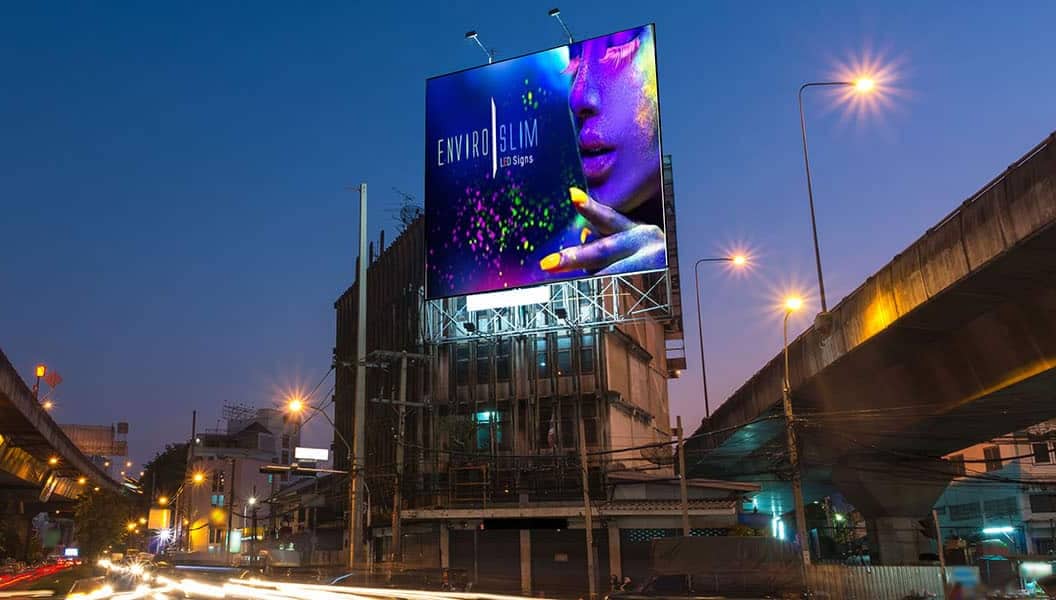
Outdoor advertising has officially entered a new era — one powered by technology, data, and design innovation. LED digital smart displays have replaced traditional static signage across cities, offering vibrant, dynamic visuals that engage audiences in real time.
Yet as advertisers, policymakers, and sustainability leaders increasingly examine the LED billboard environmental impact, one question is driving the conversation: Can digital displays be both powerful and sustainable?
In this breakdown, we explore the full environmental footprint of Outdoor LED billboards, from energy use and carbon emissions to waste management, light pollution, and responsible innovation, showing how Genoptic Smart Displays engineers its products to balance advertising performance with environmental responsibility.
Measuring the Environmental Footprint of LED Billboards
The environmental footprint of digital signage can be evaluated across four core areas: energy consumption, materials, light pollution, and electronic waste. Together, these factors determine not only how a display performs day to day, but also how it impacts communities and ecosystems over its full lifecycle. When evaluated through this lens, modern LED digital displays—particularly premium, modular systems—present clear sustainability advantages over traditional vinyl billboards.
Compared to traditional vinyl billboards, which rely on petroleum-based PVC materials, chemical inks, and frequent reprinting cycles, digital displays eliminate most physical waste. Traditional vinyl billboards depend on PVC substrates, solvent-based inks, adhesives, and repeated reprinting cycles. Each creative change requires new materials, transportation, installation labor, and eventual disposal. Over time, this creates a continuous waste stream and added emissions. Digital LED signage eliminates these recurring processes entirely; a single smart display can host thousands of creative updates without additional material input, resulting in significantly reduced waste across the lifespan of the installation.
From a sustainability standpoint, outdoor LED digital signage offers clear advantages:
- Fewer raw materials: No vinyl, adhesive, or large-format printing waste.
- Lower shipping and installation emissions: Creative changes happen digitally.
- Durable construction: Genoptic’s proprietary modules resist fading to maintain brightness and color integrity for a decade or more.
- Smart energy management: Built-in dimming and AI automation to ambient light reduce power consumption in real time.
In today’s market, sustainability can also strengthen brand images. As the public concern for climate impact continues to grow, adopting eco-friendly advertising solutions can demonstrate corporate social responsibility and future readiness. These improvements result in reduced waste throughout the product lifecycle, from material sourcing to end-of-life recycling.
Energy Efficiency + Carbon Impact of Digital Displays
Energy consumption remains one of the most discussed aspects of digital billboard sustainability, largely because early generations of LED cabinets were not optimized for efficiency. However, LEDs are inherently more efficient than incandescent or halogen bulbs, producing more light with less heat. And when deployed across an entire billboard — often operating 24/7 — the cumulative draw remains significant.
When reviewing studies, it’s important to understand what technology was measured, how long it operated, and what control systems were in place. Consider these recent studies:
- A Yale E360 analysis found that a single large-format digital billboard can use 30 times the electricity of an average American home each year.
- Billboard Insider estimates a 14×48 digital sign may consume around 24,000 kWh annually.
- The Louis Berger Group’s research showed that newer LED signage technology reduced energy use by up to 61% compared to earlier digital models.
These figures underscore why engineering choices matter. Many early digital billboards relied on inefficient power supplies, constant full-brightness operation, and poorly optimized cooling systems. Modern LED displays dramatically outperform those earlier cabinets by using higher-efficiency diodes, advanced thermal management, and intelligent brightness controls that reduce unnecessary power draw. Genoptic has pioneered solutions such as advanced SMD LED technology, offering over 281 trillion color contrast options with superior light efficiency. Combined with proprietary heat-sink structures and cooling optimization, these displays achieve maximum brightness with minimal energy waste.
In contrast, many lower-cost LED systems still operate with outdated electrical components and non-optimized cooling designs. These are inefficiencies that increase baseline energy consumption, accelerate component wear, and contribute to higher operating emissions over time. Genoptic’s engineering approach prioritizes efficiency at every system level so that sustainability gains are realized in real-world operation, not just on specification sheets.
Smart Energy Management
Genoptic’s DaySensor® auto-dimming system automatically adjusts brightness to ambient light conditions, maintaining visibility day or night while conserving electricity. Sensor-driven adjustment can save thousands of kilowatt-hours annually, especially in dense urban settings where brightness intensity often exceeds practical need. And when paired with renewable energy sources such as solar panels or grid-supplied clean energy, the result is a measurable reduction in operational carbon footprint.
For advertisers and municipalities alike, this technology translates into both environmental and financial benefits, lowering emissions while reducing energy costs over the lifespan of the display.
Reducing Waste: Materials, End-of-Life, and Modular Design
Traditional vinyl billboards require new prints every few weeks or months, often relying on non-biodegradable materials that end up in landfills. By contrast, LED digital signage eliminates the reprinting process altogether, dramatically cutting down on waste streams associated with outdoor advertising.
Not all LED billboards are built to the same standard. Each Genoptic Outdoor LED Digital Smart Display is engineered with premium components, North American manufacturing oversight, and proprietary technologies designed for long-term durability. Lower-grade imported LED systems often experience premature fading, inconsistent color accuracy, non-modular construction, and limited control capabilities, leading to higher replacement rates, increased material waste, and unreliable performance over time. On the flip side, Genoptic’s modular architecture, proof-of-play verification, cloud-based control, and 10-year warranty make sure displays perform reliably throughout their full lifecycle, not just in the first few years.
Plus, each Genoptic Outdoor LED Digital Smart Display is built with modular components that extend the product’s lifecycle. Individual modules can be replaced or repaired without scrapping the entire unit, greatly reducing electronic waste. With module lifetimes exceeding 100,000 hours, Genoptic’s displays are designed to last long beyond the typical service span of printed signage or lower-grade digital alternatives. Additionally, Genoptic’s 10-year warranty covers color accuracy and component performance to make sure that displays maintain vivid clarity without fading under intense sunlight. And at the end of life, modular components can be recycled or refurbished, aligning with circular economy principles that prioritize reuse over disposal. Manufacturers, recyclers, and municipal waste programs are working together to recover rare materials from retired LED modules and repurpose them for new applications, reducing dependency on virgin resources and strengthening local recycling networks. Another often overlooked environmental benefit is the thinner, lightweight engineering of Genoptic Smart Displays. Our displays are built with slim-profile, lightweight materials and no mechanical moving parts, reducing the likelihood of mechanical failure and eliminating components that commonly break in cheaper LED systems.
This design delivers multiple environmental advantages:
- Lower freight emissions due to reduced shipment weight
- Less raw material consumption during manufacturing
- Lower installation impact, since lighter displays require fewer structural reinforcements on buildings
- Cheaper, cleaner end-of-life disposal because fewer heavy metals and bulky components enter the waste stream
- Reduced maintenance footprint, since lightweight, solid-state construction decreases service visits and replacement parts
- All of these factors stack to significantly reduce lifecycle environmental impact, reinforcing why long-lasting, lightweight Smart Displays represent a more sustainable path forward than heavier, failure-prone alternatives.
Mitigating Light Pollution & Community Impact
Looking beyond energy and waste, light pollution represents another critical challenge. Light pollution occurs when artificial light disrupts natural darkness, thereby impacting ecosystems, wildlife behavior, and human health. Excessive brightness from billboards can contribute to glare, skyglow, and light trespass, particularly in densely populated urban areas.
Organizations like DarkSky International and the Outdoor Advertising Association of America (OAAA) have established guidelines to reduce these effects:
- Brightness standards: Daytime operation between 6,000–8,000 nits and nighttime operation between 2,000–2,500 nits.
- Ambient light limits: A digital billboard should not exceed 0.3 footcandles above ambient light levels.
- Smart dimming systems: Automatic brightness adjustment at dusk and dawn.
- Curfews and community coordination: Turning off nonessential signs after certain hours to preserve the night sky.
As cities adapt to smart infrastructure, new policies are shaping how outdoor LED displays operate within sustainable urban ecosystems. Municipal codes increasingly include metrics for light output, recyclability, and energy performance, while industry organizations are collaborating with manufacturers to define benchmarks that encourage reduced glare, modular design, and longer product lifecycles.
Genoptic’s DaySensor® technology supports compliance with these standards automatically, using photometric sensors to adjust brightness levels in real time. Importantly, this conserves energy while also protecting surrounding communities and local wildlife from unnecessary light exposure.
Health & Ecological Considerations
Chronic exposure to bright nighttime lighting can disrupt human circadian rhythms and reduce melatonin production, subsequently leading to sleep and health effects. Meanwhile, nocturnal animals experience disrupted migration and feeding cycles in areas with high skyglow levels. Responsible display design, including proper shielding, dimming, and placement, lessens these impacts while preserving visibility and advertising effectiveness.
When installed strategically, smart signage can also serve the public good. Displays positioned for community alerts, transportation updates, or emergency notifications provide civic value to residents beyond marketing, justifying the energy footprint through tangible social benefit.
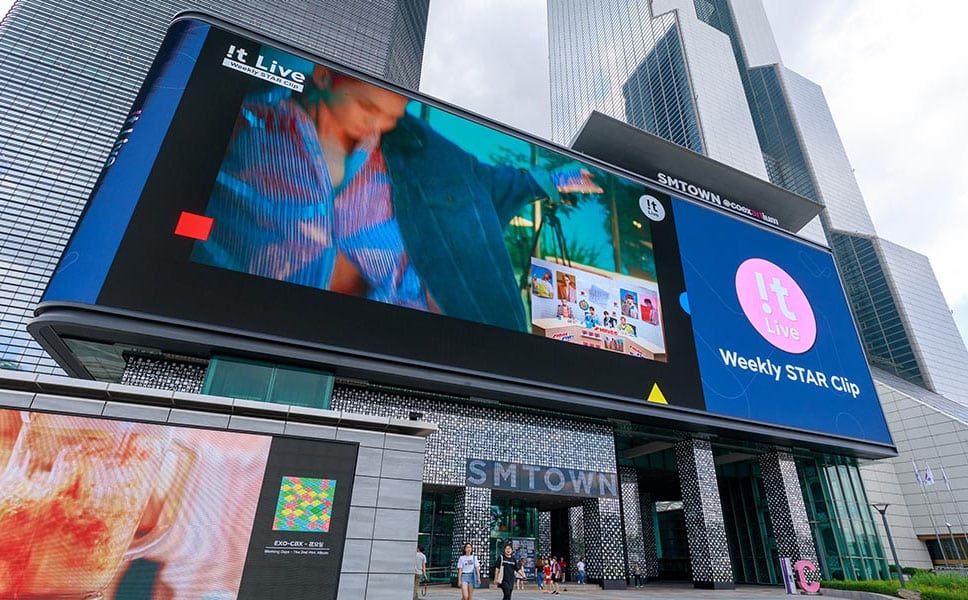
Sustainable Practices in Digital Advertising
Environmental performance of LED signage doesn’t stop at the hardware level; rather, it extends to how advertisers, agencies, and cities ultimately use the tech. Regardless of campaign goals, responsible digital advertising always involves lifecycle planning, ethical design, and policy alignment.
Best practices include:
- Selecting renewable power sources where possible.
- Optimizing display schedules to minimize run time during low-traffic periods.
- Choosing high-efficiency content design with strong color contrast, simplified animations, and proper pixel pitch to reduce strain on hardware.
- Avoiding heavy effects like glows or drop shadows that distort visibility on lower pixel pitches and increase energy use.
- Leveraging software tools like Genoptic’s VideoStar platform, which empowers users of any experience level to create eye-catching content optimized for both performance and efficiency.
Strategies like these make it simpler for brands to maximize visual impact while reducing energy waste and emissions, achieving both marketing reach and green goals. This shift positions display providers like Genoptic ahead of the curve, meeting the sustainability demands of municipalities and environmental advocates alike.
Striking a Balance of Innovation and Sustainability
No technology is truly impact-free, but innovation and responsibility can coexist. LED digital billboards mark a major evolution in outdoor communication, merging the creative freedom of digital media with ongoing advances in green technology.
By improving energy efficiency, minimizing waste, and implementing responsible brightness control, Genoptic Smart Displays is redefining what sustainable advertising looks like. Our SMD LED systems, auto-dimming DaySensor®, and long-lasting modules ensure that every display performs brilliantly without compromising environmental integrity.
The ultimate goal is balance: a world where digital displays inform and inspire while supporting a cleaner, more sustainable landscape. Through premium engineering, modular longevity, and intelligent system design, Genoptic proves that digital signage can deliver a significant impact for advertisers while supporting environmental stewardship and community well-being.