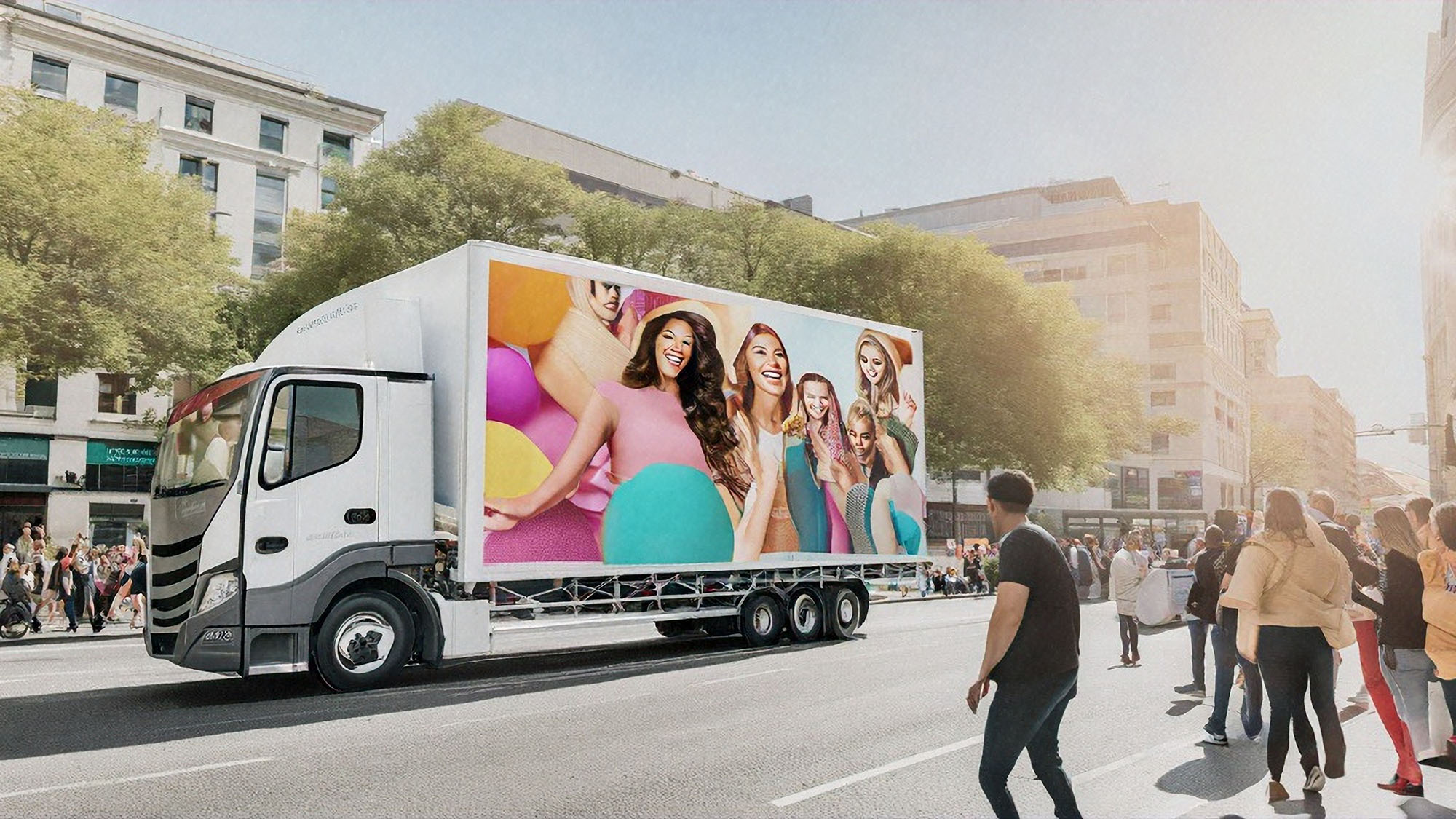
How Much Does Mobile Billboard Advertising Cost in 2026? Your Complete Rate Breakdown
Mobile billboard advertising costs in 2026 depend on three main variables: the format you choose, the market you advertise in, and the length of the campaign. Static mobile billboard vehicles generally cost between $800 and $2,400 for 8 hours, while digital and LED mobile billboard trucks, trailers, or vans, usually range from $1,250 to 3,600 for the same duration, according to Blue Line Media mobile billboard advertising pricing. In premium markets, monthly campaigns can move far beyond day rates, with Rolling Adz noting that longer runs in major cities often reach $5,000 to $20,000 or more depending on market demand, route frequency, and scheduling.
Minimum campaign budgets are also higher than many businesses expect. Many providers require a minimum purchase of $5,000 or more per market, which may be spread across several display periods rather than a single run. That matters for smaller advertisers, because the real question is: what does it take to launch a campaign with enough frequency to make an impact?
While Genoptic Smart Displays does not manufacture complete advertising vehicles, it provides high-performance LED display systems that can be custom-sized and integrated into mobile billboard trucks, trailers, and specialty vehicles built by fabrication partners. This allows businesses to create fully customized mobile advertising solutions using professional-grade LED display technology.
Digital LED formats cost more than static vinyl wraps, but they offer much more flexibility. A static display gives you one printed creative, while an LED display can rotate multiple ads, support full-motion video, and adjust messaging by time of day. Genoptic Smart Displays delivers LED display systems used for mobile billboard applications with SMD LED modules, 281 trillion color contrast options, and full video capability, creating a much more dynamic platform than a basic wrapped truck or trailer.
Market location creates another huge difference. Major metro areas like New York City, Los Angeles, and Miami command far higher rates than smaller cities or rural markets. Influize notes that stationary billboard advertising in top-tier cities can reach $15,000 to $25,000 per month, while mid-size and lower-demand markets can be dramatically cheaper. Businesses trying to forecast budgets should always think in terms of market plus format, not format alone.
6 Factors That Drive Your Mobile Billboard Advertising Cost Up or Down
The geographic market is usually the biggest pricing variable. Custom mobile integrations using Genoptic LED displays in Times Square or on Sunset Boulevard can cost many times more than the same campaign in a mid-size city, largely because of traffic density, advertiser demand, labor costs, and the premium associated with highly visible routes. Influize makes this point clearly, and it is one reason smart advertisers align audience density with budget instead of automatically chasing the most expensive ZIP codes.
Campaign duration also affects the real rate you pay. Single-day or short-run campaigns usually carry the highest daily cost, while weekly and monthly commitments tend to lower the effective unit price. According to Eager LED Screen, longer commitments can reduce the effective rate by roughly 20 to 30 percent compared with short bookings. Businesses that know they will advertise repeatedly often save money by planning a longer campaign upfront.
Display type matters just as much. Static vinyl billboards usually have lower rental and production costs, but digital LED formats give advertisers multiple creatives, real-time updates, stronger engagement, and scheduling flexibility. LED display systems used in mobile billboard trucks and trailers can include features like DaySensor auto-dimming, which improves visibility throughout changing light conditions while helping reduce wasted brightness and power use. Genoptic provides this technology as part of its LED display systems for custom mobile integrations.
Other cost drivers can quietly raise the total. Route specificity usually costs more than general circulation, and rush hour or event-adjacent hours often carry a premium because the impressions are more valuable. Creative production also differs sharply by format, since printed vinyl requires physical production while LED campaigns can be created, adjusted, and reused digitally.
Mobile Billboards vs. Static Billboards vs. Digital Ads: Which Delivers More Value Per Dollar You Spend?
Value in advertising is not just about the price, it is about how much attention, flexibility, and action you get for that spend. Mobile billboards typically achieve a CPM between $0.75 and $2, according to iAlternative Media. That compares favorably with many static and digital billboard placements, where Broadsign estimates CPMs range from $2 to $9 depending on format and market.
Static billboards still have value, especially when a location has strong long-term traffic, and brand repetition matters more than mobility. The tradeoff is that fixed boards cannot move with your audience, react to events, or shift neighborhoods as campaign needs change. Mobile billboards are more flexible, making them particularly effective when targeting venues, commuter routes, or event traffic.
Digital advertising offers precise demographic targeting, but it comes with its own weaknesses. Online campaigns often face ad fatigue, shrinking organic reach, and widespread ad blocking. Analyzify’s ad-blocking data highlights how massive ad-blocker usage has become, while social organic reach continues to decline. Mobile billboards avoid those issues entirely because they are physical, visible, and unskippable. That matters when OAAA reports that 73 percent of consumers express favorable views of DOOH ads.
For businesses planning ongoing campaigns, ownership can improve the value equation even more. Instead of renting repeatedly, brands can compare rental economics to ownership by looking at compare to LED billboard pricing or exploring Mobile LED Digital Billboard Trailers to see how recurring campaign costs stack up against a long-term asset.
What’s Included in Your Mobile Billboard Rate — and What Hidden Costs to Watch For
Many advertisers assume the quoted rate covers everything, but for custom mobile billboard projects, businesses should separate vehicle fabrication costs from LED display system costs, since these are often handled by different providers. Standard mobile billboard pricing often includes vehicle rental, driver, fuel, and GPS route tracking, but creative production is usually separate. According to LSI Media, basic billboard design and programming can range from $1,000 to $5,000, while more complex animated campaigns can exceed $25,000.
Digital LED formats can lower creative costs over time because the same files can be reused and updated without reprinting. That is where Genoptic’s VideoStar platform creates value. Its template-based design tools make it easier for non-designers to create, schedule, and publish LED-ready content without relying on new production every time a campaign changes.
Insurance and liability also deserve close review. Some providers include general liability, vehicle insurance, or property damage coverage, while others treat them as pass-through or optional costs. Setup and takedown fees, permit charges, and campaign reporting may also appear after the initial quote. For Genoptic owners, InteLED reporting adds proof-of-play documentation and scheduling verification without layering on a separate analytics charge, which is useful for both internal measurement and third-party advertisers.
Renting vs. Owning a Mobile LED Billboard: Find Out Which Option Saves You More
Renting makes sense for one-off or occasional campaigns, but frequent advertisers often reach a point where ownership becomes more cost-effective. A business renting a digital mobile billboard at $20,000 per month in a premium market would spend $240,000 per year on rental alone. At that point, the conversation shifts from campaign spend to asset strategy.
The upfront cost of a mobile LED trailer varies based on display size, pixel pitch, fabrication requirements, and LED display specifications. Financing programs such as DAP and leasing can help spread eligible display costs over time and reduce the capital barrier. Ownership also creates a depreciable asset rather than a pure recurring expense. That matters for businesses that know mobile advertising will remain part of their long-term marketing mix.
There is also a revenue side to ownership. Mobile billboard owners can sell advertising time to other businesses, and InteLED proof-of-play reporting provides the type of documented campaign delivery many advertisers require. LED mobile billboards from Genoptic also feature WeatherPro weatherproofing, fade-resistant modules, long-term warranty coverage, and up to 12,000 NITS brightness to help support long-term performance and value.
How to Get the Most Impressions Per Dollar from Your Mobile Billboard Campaign
The best campaigns are not just the ones with the biggest budget. They are the ones deployed with the smartest strategy. Route optimization matters more than many businesses realize. High-dwell-time environments such as convention centers, sports venues, event entrances, and queue-heavy retail zones often outperform high-speed corridors where viewers only have seconds to process the message. Calton Datx emphasizes how dwell time influences engagement and ROI.
Creative design should match the viewing environment. OOH International notes that short dwell-time roadside settings require bold, fast, simple messaging, while longer dwell-time areas can support storytelling and QR code integration. For custom mobile integrations using Genoptic LED displays, best practice is high contrast, bold typography, seven words or fewer per frame, and minimal visual clutter. VideoStar helps make that process easier by letting advertisers build and schedule optimized content without specialized design software.
Measurement is just as important as placement. Businesses should track GPS route data, proof-of-play logs, traffic-based impression estimates, and downstream results such as website traffic, promo code redemptions, or QR scans. InteLED reporting helps automate much of this, which makes it easier to understand what is driving performance and where the next campaign should be refined.
Mobile Billboard Regulations and Permits: What You Need to Check Before You Launch
There is no national mobile billboard permit in the United States. Cities define their own rules, and Can’t Miss US outlines just how fragmented that regulatory landscape can be. That means a campaign that works in one market may face serious restrictions in another.
Los Angeles is one of the clearest examples. Under Los Angeles Municipal Code Section 87.53, parking a mobile billboard advertising display on any public street or public land is prohibited. Private property deployments can be different, but local rules still need to be checked before launch. Other cities may impose time-of-day limits, continuous-movement requirements, or restrictions near schools and residential areas.
Brightness and content restrictions also vary by jurisdiction. Some cities prohibit flashing or certain types of animated content, which is why features like DaySensor auto-dimming and adjustable brightness controls matter. Genoptic mobile displays also carry CSA, UL, and ETL certifications, helping ensure code compliance and insurability in markets where electrical safety requirements are closely reviewed.
Questions You Should Ask Before Spending on Mobile Billboard Advertising
Businesses should start by asking whether mobile billboard advertising fits the actual campaign goal. It can work well for small businesses, especially when the route is tightly focused on an event, neighborhood, or competitor location. Strong targeting can make even a single-day booking worthwhile if the objective is clear and localized.
Lead time is another key question. High-demand markets and seasonal peaks often require earlier booking, while slower periods may allow faster turnaround. Businesses should also ask how specific targeting can be. Routes built around ZIP codes, venues, or competitor locations are one of the biggest strengths of mobile billboard advertising, and they are part of what makes the channel more tactical than many fixed placements.
Creative production timing matters too. Businesses should confirm how long it takes to build and approve content, especially if the campaign includes multiple messages or LED-specific creative. Finally, frequent advertisers should ask whether renting still makes sense. For those running repeated campaigns, Genoptic provides mobile solutions that helps business leaders have more ownership and control over their advertising.