The Future Of Billboard Advertising With Smart Displays
Smart billboard outdoor advertising has enabled new times. We’re in an era where static designs and long print cycles no longer define the ways of outdoor advertising strategy. The capabilities of digital signs, LED billboards, and mobile screens have forever reimagined how advertisers can connect with potential customers as they travel highways, inhabit stadiums, and work in commercial districts.
This article explores practical outdoor billboard advertising tips that help advertisers plan, design, and optimize campaigns for modern LED Smart Displays. Readers will learn how to improve advertising planning, readability, strengthen messaging, and boost visibility across outdoor, mobile, and stadium environments by applying principles tailored to LED digital displays rather than traditional print.
LED Smart Displays redefine how billboard ads function because they offer real-time content control, advanced color accuracy, and visibility tools that keep campaigns sharp in shifting weather or daylight. Genoptic Smart Displays innovations, including DaySensor®, VandelGuard ®, SMD LED technology, Videostar® content management, and strong weatherproofing, set a standard for performance among outdoor digital signage. Beyond technology, this article reviews campaign planning, design, analytics, maintenance, and budgeting, giving advertisers the groundwork to build billboard campaigns suited for modern environments.
Planning Your Billboard Campaign
Before choosing colors, fonts, or visuals, advertisers should clarify what they expect the billboard to accomplish. Having clear goals informs the billboard’s function within a broader advertising map. A strong billboard campaign should support basic objectives like getting attention, increasing brand awareness, driving people to purchase, or promoting limited-time events. Every objective should directly weave into measurable campaign metrics, so stakeholders discern how the billboard contributes to growth.
Choosing the right audience and location is central to successful billboard design. Highway locations can reach massive amounts of drivers daily, while urban areas may reach the mind of slower-moving viewers. Stadium environments create captive audiences during games, concerts, and events. Mobile trailers can travel to places where foot traffic peaks, adding flexibility and relevance. Highway signs can reach more than 70% of U.S. drivers weekly according to OAAA data, which highlights the value of high-visibility placement. Decisions about where to place a billboard should reflect viewing speed, dwell time, and the type of potential customer moving through the area. Urban intersections offer slower speeds, while long stretches of highways require fewer words, larger typography, and bolder colors.
Choosing The Right Display Type
There are three primary categories used today: static print, digital LED, and mobile digital signage. Static billboards rely on printed vinyl, so they cannot update quickly and often require manual installation. Digital signs allow real-time content changes and can rotate messaging for different times of day and even trigger based content in accordance to weather, language or live events A digital billboard eliminates waste associated with repeated printing, and advertisers can adjust creative more often without production delays. Mobile billboards placed on trailers or trucks extend reach to events, construction zones, parades, and seasonal promotions.
Pixel pitch influences how crisp the billboard appears from different distances. A lower pitch means tighter LEDs and sharper imagery for closer viewers. Larger pitches work for long-distance viewing where clarity remains strong even with fewer pixels. Brightness, measured in NITS, determines how visible the billboard ad remains in full daylight. Genoptic Smart Displays LED digital displays reach up to 10,000 NITS to maintain visibility in heavy sun. SMD LED technology delivers strong color contrast with trillions of color variations, and non-fading modules ensure consistent quality year after year. DaySensor® automatically adjusts brightness to preserve energy and ensure good visibility in changing light.
Designing For Impact And Readability
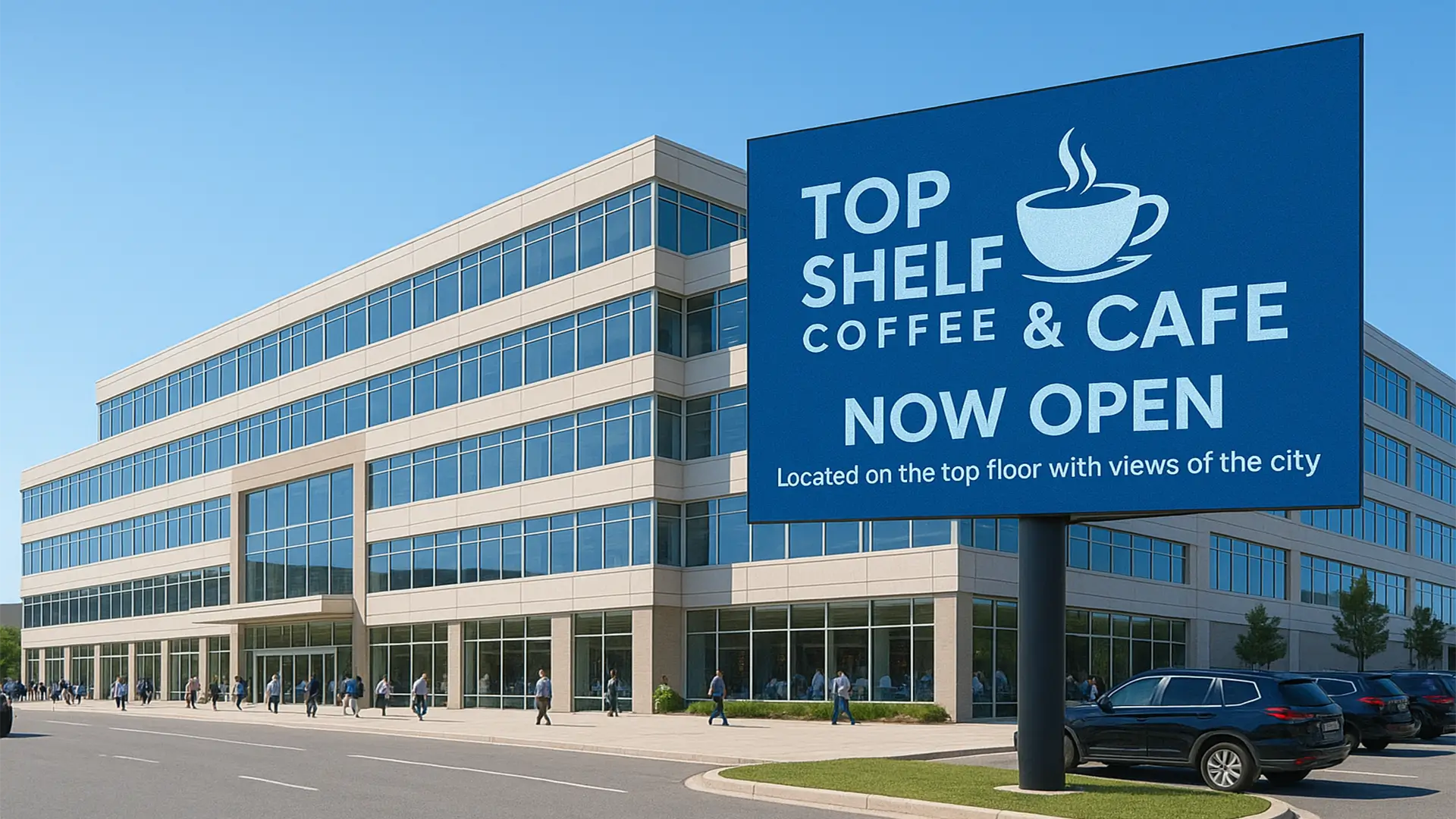
Effective billboard design depends on delivering meaning fast. With an average viewing time of six seconds or less, billboard advertising tips should center on simplicity. Strong billboard design avoids clutter, keeps messages short, and creates immediate attention. Most viewers cannot process more than 5 to 7 words during a passing glance, especially for highway routes. Large fonts, bold shapes, and high-contrast colors help information stand out.
LED displays differ from print because pixel grids can reduce clarity when the creative relies on detailed shadows or gradients. Subtle fades often blur when displayed at a distance, so advertisers should favor clear shapes and defined edges. Outlines can help typography pop without creating visual distortions. Videostar® software supports animation timing, content scheduling, and transitions tailored to LED panels, and advertisers can preview how animations look at different distances before publishing. Billboards permitted to use motion should keep transitions slow, since fast movement can distract drivers and reduce comprehension.
Tailoring Content For Venue And Weather Conditions
Billboard ads live in many environments, so content should react to different viewing scenarios. Stadium screens can show longer videos because viewers are usually seated and stationary. Mobile trailers work well at festivals or conferences where foot traffic moves slowly. Highways require very short messages and adjustable brightness to stay readable in sun, shadow and night viewing. Digit LED billboards rely on dynamic illumination, so understanding local weather helps maintain clarity.
Weather, ambient light, and season influence how well digital signs perform. DaySensor® adjusts brightness for daytime and nighttime conditions. Technologies like WeatherPro®, VandelGuard and Tempurzone® protect electronics from rain, heat, and snow, preventing shutdowns or dimming. Weather-related performance ensures advertisers maintain visibility through harsh conditions, maintaining audience awareness and message consistency year-round.
Using Analytics And Software To Measure Success
A billboard digital campaign can outperform expectations if advertisers track performance. LED digital displays and their software platforms allow detailed analytics unavailable with static print. Metrics to track include impressions, dwell time, QR code scans, and content performance. Measuring engagement helps determine which creative works best for different times of the day.
Videostar® and InteLED® reporting tools enable proof-of-play documentation, update schedules, and rotation analysis. Advertisers can use data to adjust content during a live campaign, removing underperforming designs or testing new visuals. This iterative approach improves efficiency without relying on assumptions. Modern digital signs allow advertisers to refine campaigns in real time based on actual viewer behavior, creating stronger results.
Maintenance, Longevity, And Sustainability Considerations
The downside shouldn’t be overlooked. It’s true that outdoor LED systems face weather changes, dust, and long operating hours. But good maintenance planning extends display lifespan and keeps campaigns performing. Static print often fades quickly, while Smart Display modules resist color distortion for years. The big upside is that Genoptic Smart Display modules are backed by a 10-year manufacturers warranty, helping advertisers avoid premature replacement costs. Over time, that amounts to huge benefits in terms of maintenance costs. Studies show that LED displays use potentially 50-70% less energy than other kinds of traditional illuminated signage.
No matter what an advertiser’s budget is, durability and sustainability matter in the long term. Using less energy reduces both operational costs and environmental impact. North American-built components offer stability and lower failure rates. Reduced maintenance needs also limit landfill waste from damaged parts. Reliable hardware keeps campaigns active without interruptions, protecting visibility for advertisers who depend on consistent performance.
Budgeting And Finance Options For Smart Displays
There’s a total cost of ownership to be considered, too. That plays into long-term value. Costs typically include installation, power requirements, software, creative design, and periodic maintenance. Those expenses can’t and shouldn’t be ignored. Smart Displays often cost more upfront than static options, but they eliminate recurring print fees and allow ongoing content updates. This provides cost benefits over time.
Financing and leasing options help businesses adopt digital signs without significant upfront spending. Genoptic Smart Displays offers flexible financing built around Budget needs and display size. These options support any advertisers looking to make the smart transition from older static formats to modern LED displays without burdensome financial strain.
Common Mistakes To Avoid In Billboard Advertising
Many billboard ads miss their mark because of familiar design errors borne out of lack of experience or trying to use standard print practices with digital advertising methods. The two are very different, so there’s a little bit of a learning curve, but nothing that can be figured out with a little bit of review and understanding the most common mistakes.
Text overload prevents viewers from processing information at driving speeds. Poor color contrast or weak typography reduces readability. Some advertisers ignore context, creating visuals that look good on a desktop mockup but fail when displayed outdoors.
LED-specific mistakes include choosing the wrong pixel pitch for viewing distance or using creative with shadows that blur on digital signs. Neglecting analytics leads to repeated issues across campaigns. Studies show low brightness settings reduce visibility, lowering accuracy in recall. Identifying these pitfalls helps advertisers produce clearer content with stronger impact.
Campaign Checklist And Next Steps
Like all great marketing campaigns, before setting in motion a billboard campaign, advertisers should get together with clients and define precise goals, choose an appropriate location (or locations), select the best display type for the job, create optimized content with the help of a seasoned writer expert in advertising copy, schedule messaging, and set performance metrics. Each of these steps can be time-consuming, but taking time and being precise pays off in spades. Then, during the launch phase, software tools help track engagement and visibility. Maintaining system performance ensures uptime while content updates keep messaging fresh.
After the campaign, advertisers should analyze metrics to understand what worked. Evaluating design performance helps refine future billboard advertising tips for better outcomes. Sustainability benchmarks, like energy use and module longevity, shape long-term strategy. Planning future campaigns becomes easier when businesses understand which visuals attract viewers, how long drivers engage with the billboard, and which messages bring customers to action.
Why Choose Genoptic Smart Displays For Your Campaign
Genoptic Smart Displays stand out from other signage solutions through patented technologies, strong manufacturing standards, and reliable field performance. With more than 130 patents, the company’s innovations drive color consistency, durability, and brightness. IP65 and IP67 weatherproofing protect displays from harsh elements, while 10,000 NITS automatic adjustable brightness ensures visibility in day and night. Modules resist fading and maintain image quality over long cycles.
Videostar® software, 24/7 support, and North American-built components make Genoptic Smart Displays a dependable choice for advertisers needing consistent uptime. Thousands of installations reinforce results across industries. A 10-year manufacturers warranty supports long-term investment stability. For companies planning a new billboard campaign, Genoptic Smart Displays offers site audits, technical guidance, and flexible financing through financing programs.
Billboard design has changed dramatically with the rise of digital billboards and LED Smart Displays. Advertisers who adapt their strategies gain more control over visibility, timing, and messaging. Campaign success comes from pairing strong planning with practical billboard advertising tips, clear design, and analytics-driven updates. Whether you’re designing for stadium screens, mobile trailers, or roadside signs, Smart Displays create opportunities to reach customers with clarity and relevance. For teams ready to upgrade their outdoor advertising approach, the next step is evaluating goals, selecting the right display, and building a campaign that captures attention fast.